

What Is BV?
Bacterial Vaginosis (BV) is the most common vaginal infection among women of reproductive age.
It happens when the normal balance of vaginal bacteria—especially protective Lactobacillus—is disrupted, allowing other bacteria to grow.
BV is not a sexually transmitted infection, but sexual activity can increase the risk.
The condition often shows up as:
-
Changes in discharge
-
Unusual odor (“fishy smell”)
-
Itching or burning
-
Higher pH (above 4.5)
While treatable, BV tends to recur, which is why understanding the risk factors is essential.
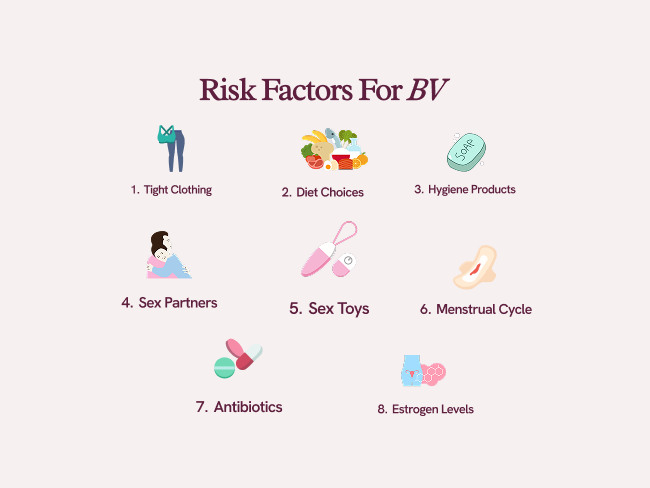
8 Key Risk Factors for BV (Based on the Infographic)
Modern lifestyles expose women to many BV triggers beyond sex. Here are the most common:
1. Tight Clothing
Non-breathable fabrics trap heat and moisture, creating an environment where harmful bacteria thrive.
Synthetic underwear, leggings worn for long hours, or damp workout clothes can contribute.
2. Diet Choices
High-sugar diets can promote the overgrowth of harmful bacteria and yeast.
A balanced diet rich in fiber and whole foods supports a healthier vaginal microbiome indirectly through the gut.
3. Hygiene Products
Many feminine washes contain fragrance, harsh surfactants, or alkaline formulas that disrupt vaginal pH.
Even “natural-scented” products can throw off Lactobacillus.
The healthiest approach: gentle cleansing with water only.
4. Sex Partners
New or multiple partners can introduce new bacteria, which may disrupt natural balance.
Seminal fluid is alkaline, temporarily increasing vaginal pH and making BV more likely.
5. Sex Toys
If toys are not cleaned properly or shared, they can transfer bacteria.
Material type, lubricants used, and storage hygiene all play a role.
6. Menstrual Cycle
Menstrual blood has a pH of around 7.4 (more alkaline).
This temporarily raises vaginal pH, making BV more common during or after periods.
7. Antibiotics
Antibiotics kill harmful bacteria—but they can also destroy beneficial Lactobacillus.
This makes BV more likely after antibiotic treatments for unrelated issues.
8. Estrogen Levels
Estrogen helps maintain thick, Lactobacillus-rich vaginal tissue.
Low estrogen—common postpartum, during breastfeeding, or around menopause—may increase BV risk.
Why BV Keeps Coming Back
Many women treat BV with antibiotics but still experience recurrence.
Why? Because medication removes the bad bacteria, but does not restore the good bacteria that protect the vagina.
Without Lactobacillus dominance, BV often returns.
Modern studies suggest that long-term balance depends on:
-
Healthy vaginal pH
-
Stable Lactobacillus population
-
Supporting gut health (the source of many vaginal microbes)
This is why recurrence is common even after treatment.
Supporting Your Vaginal Microbiome (Soft Brand Insert)
Scientific reviews highlight that specific Lactobacillus strains—such as L. rhamnosus GR-1 and L. reuteri RC-14—help restore and maintain healthy vaginal flora, reducing the frequency of BV episodes.
Today, many women choose women’s probiotics designed for gut–vagina–urinary support, as part of their long-term intimate wellness routine.
These products help reinforce healthy pH and natural bacterial balance in a gentle, daily way.
How to Reduce BV Risk Daily
Here are habits that make a real difference:
-
Choose breathable cotton underwear
-
Avoid scented washes and harsh cleansers
-
Change out of wet workout clothes quickly
-
Clean sex toys thoroughly
-
Avoid excessive sugar
-
Support your gut and vaginal microbiome
-
Consult a clinician if BV becomes recurrent
Final Thoughts
BV is common, treatable, and often preventable.
Understanding your personal risk factors allows you to take control of your vaginal microbiome—through lifestyle choices, gentler hygiene practices, and science-backed supplements that support long-term balance.When women understand their bodies, they can care for themselves with confidence.